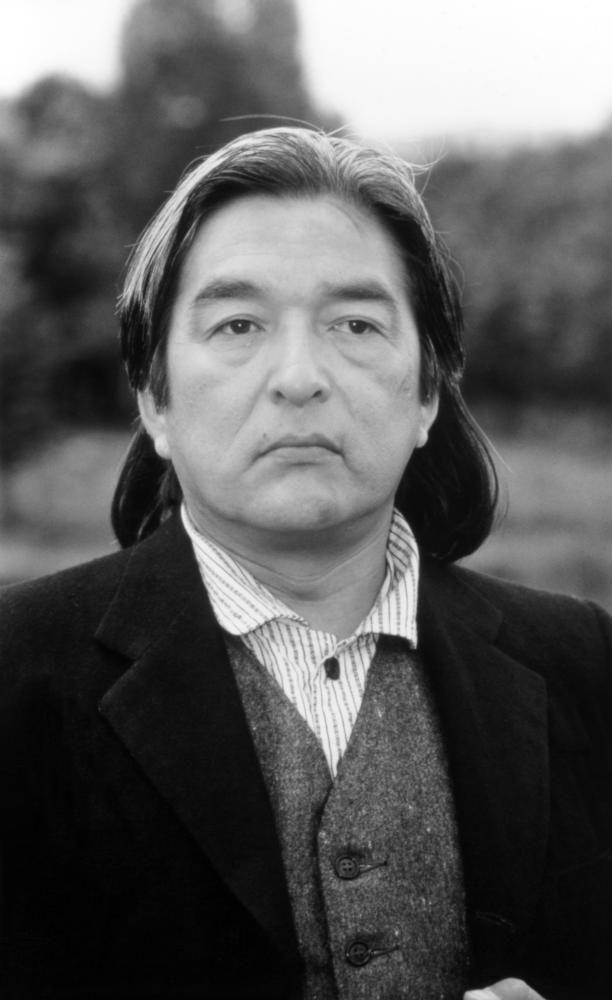
Graham Greene moved through the twentieth century with a reporter’s eye and a novelist’s ear, carrying his stories from seaports and border towns into the gray zones of conscience. Born in 1904 and active across six decades, he wrote novels, short stories, plays, screenplays, and travel books that crossed the usual boundaries between literary fiction and popular thriller. He called some of his works “entertainments,” yet the distinction rarely held; even his leanest plots return to the same pressures-faith and doubt, loyalty and betrayal, private guilt and public violence.
A Catholic convert who resisted the label of “Catholic novelist,” Greene treated belief less as a solution than as a test, a way of measuring human frailty under duress. His years as a journalist and his service with British intelligence during the Second World War fed a lifelong interest in secrecy, surveillance, and the moral costs of political action. The settings he chose-Mexico under anticlerical laws, wartime London, postcolonial West Africa, Batista’s Havana, Duvalier’s Haiti, French Indochina-are not merely backdrops but catalysts, tightening the screws on his characters until their choices reveal uncomfortable truths.
This article introduces Greene’s life and travels, his evolving forms and themes, and the particular clarity with which he mapped the intersections of faith, power, and fear. It follows the routes that led from reportage to fiction, from the cinema to the page, and from the local to the global-routes along which his stories continue to move.
The Moral Cartography of Graham Greene: Betrayal, Belief, and Political Conscience in Context
Greene’s fiction sketches a moral map where private vows collide with public ruptures, rendering betrayal not a single act but a climate: Fowler’s weary pragmatism shadowing Pyle’s innocence in Saigon, Scobie’s pity curdling into sin under the pressure of empire, the whisky priest’s flight turning sacrifice into a fugitive ritual, Sarah’s desire embroidering the fabric of belief. In these zones, political conscience becomes a navigation tool that never points cleanly north; it wobbles with desire, fear, and the shrapnel of history. The result is a narrative topography where borders-between love and treachery, grace and survival-are porous, and where the passport you carry is always stamped with ambiguity.
- Betrayal: intimate ruptures bleeding into ideological turns; promises kept at the expense of people.
- Belief: Catholic doubt as engine, miracles that arrive disguised as loss, penance folded into chance.
- Conscience: costly choices; compassion and complicity sharing the same address.
| Work | Compass Point | Locale |
|---|---|---|
| The Quiet American | Realpolitik vs. innocence | Vietnam |
| The Heart of the Matter | Duty vs. desire | Sierra Leone |
| The Power and the Glory | Grace vs. survival | Mexico |
| The End of the Affair | Faith vs. possession | London |
Stylistically, Greene’s compass blends reportorial clarity with parable-like compression: espionage plots that double as confessions; travel writing that maps the fault lines of empire; dialog that sounds pragmatic while smuggling metaphysical weight. The moral weather he charts-monsoon, drought, salt-wind and smog-presses on each decision until it becomes both public and private, an act recorded by history and by the soul. In that pressure system, politics is a theology of consequences, and theology is a politics of the heart: muted, risky, and never quite finished with us.
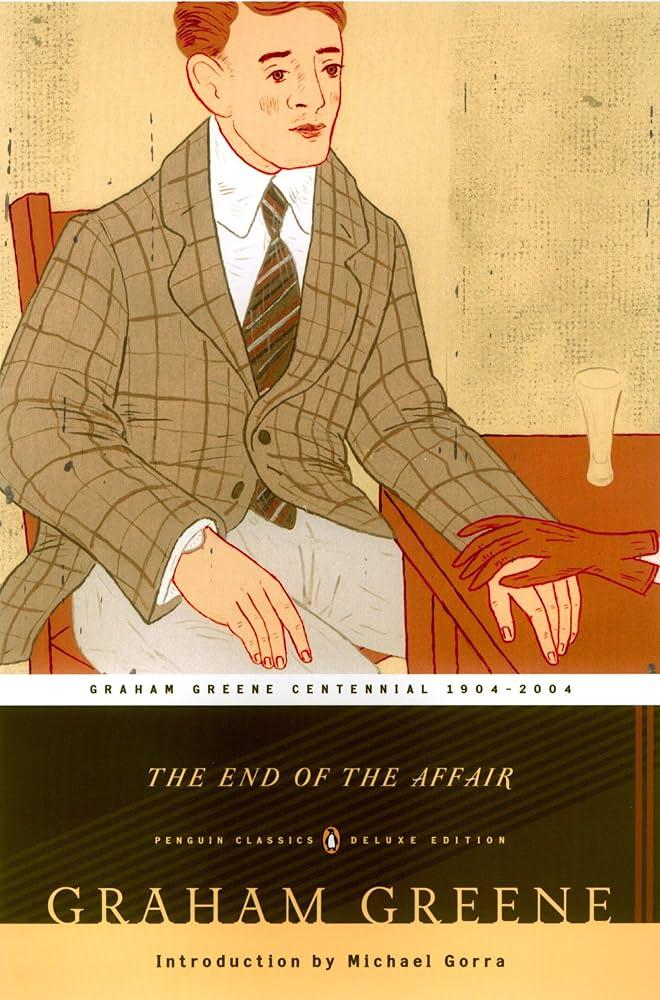
Where to Begin and What to Read Next: A Practical Path from Brighton Rock and The Power and the Glory to The Quiet American and The Comedians
Start with conscience under siege. Read the menace-and-mercy pairing of Brighton Rock and The Power and the Glory to catch Greene’s weather-guilt like a barometer, grace like a draft through a shut room. Then choose a bridge: The Heart of the Matter thickens ethical claustrophobia; The End of the Affair sharpens voice, memory, and doubt. These ready your ear before the frame widens to geopolitics: Saigon’s hushed cafés in The Quiet American, Port-au-Prince’s hilarity-and-horror in The Comedians. Move not by publication order but by pressure-personal damnation first, public catastrophe second-and you’ll feel the continuity of Greene’s obsessions without the fatigue of chronology.
- Pair for resonance: Brighton Rock → The Heart of the Matter; The Power and the Glory → The End of the Affair.
- Toggle modes: slot an “entertainment” between denser “novels” to keep pace taut and themes lucid.
- Follow the signatures: betrayal, pity, state power, and the uneasy traffic between innocence and harm.
- Listen for witnesses: narrators often testify from the edges; their doubt is your compass.
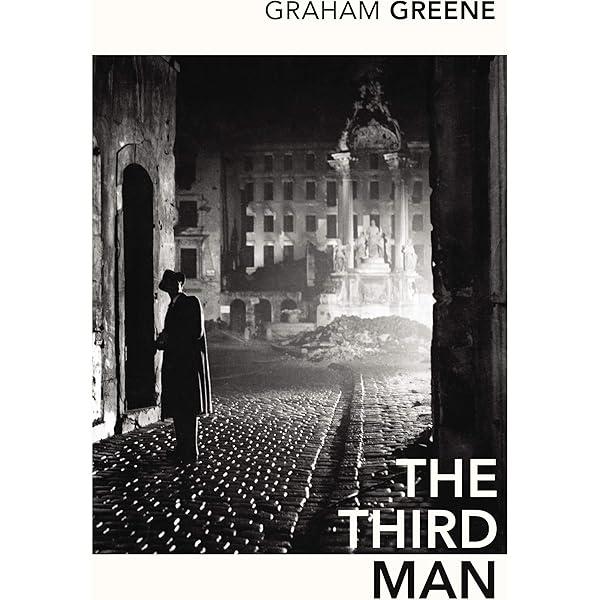
Then widen the map. With your moral instruments calibrated, step into The Quiet American for the anatomy of “innocence” as policy, and into The Comedians for carnival dread under Duvalier-farce smudged with fear. Keep momentum by alternating weight: a swift sleight-of-hand like Our Man in Havana or the lean The Third Man can aerate the heavier books without loosening their grip. Read in twos, noticing how private vows warp public acts; Greene’s streets change, but the weather holds.
| If you’re here | Next | Bridge | Focus |
|---|---|---|---|
| Brighton Rock | The Quiet American | The Heart of the Matter | Complicity vs. “innocence” |
| The Power and the Glory | The Comedians | The End of the Affair | Public terror, private vows |
| Need a breather | Our Man in Havana | The Third Man | Comedy shading into dread |
How Greene Builds Tension: Point of View, Pacing, Moral Stakes, and Concrete Tips for Close Reading or Teaching
Greene’s tension often clicks into place the moment a scene narrows to a close third-person that feels like a pulse in the ear: a jitter of conscience, a withheld name, a clock that won’t stop ticking. He toggles between an objective lens and free indirect style, letting irony breathe while tightening the net around one mind. The tempo follows suit-swift set pieces punctuated by quiet, pressure-cooker pauses-so that a doorway, a match flame, or the scrape of a chair becomes a fuse. Watch how a pursuit bends into prayer, how a confession stalls at a half-sentence, how a cut-to-black replaces the expected revelation and forces the reader to carry the tension forward.
- Point of view pivots: shifts from public observation to private dread just before a choice is made.
- Pacing compression: short beats, clipped dialogue, and jump cuts in danger; longer breath when memory or guilt intrudes.
- Strategic omission: pronouns without clear referents, unnamed places, or delayed identifiers to seed unease.
- Scene thresholds: doors, borders, and checkpoints operate as narrative hinges and moral gates.
The stakes are rarely just survival; they are moral calculus-loyalty versus truth, faith versus self-preservation, pity versus justice-scored against the grain of ordinary objects (a bottle, a rosary, a letter) that become counters in a spiritual economy. For close reading or class discussion, track how a character bargains with themselves: not only what is done, but how language prices an act-words like “necessary,” “clean,” “mercy,” “accident” telegraph the rate of exchange. Treat the setting as a moral instrument: weather, light, and bureaucratic rooms exert pressure until a small decision sounds like a gunshot.
- Annotate pronouns: mark every “he/she/they” in a hot scene; note where reference blurs to amplify tension.
- Time signatures: highlight clocks, deadlines, and travel times; sketch a timeline and locate narrative gaps.
- Sentence barometer: chart sentence length across a chapter to visualize acceleration and stall.
- Ethical lexicon: circle words of guilt/absolution; paraphrase the central dilemma in one crisp sentence.
- Object ledger: list recurring items (money, keys, relics) and assign the “cost” each imposes on a choice.
- Doorway test: identify thresholds; predict the decision before crossing, then compare to outcome.
| Aspect | What to Notice | Class Activity |
|---|---|---|
| Point of View | Pronoun drift; free indirect spikes | Rewrite a scene from the “other” angle |
| Pacing | Short lines; ellipses; hard cuts | Graph sentence length vs. tension |
| Moral Stakes | Guilt/grace/bargain vocabulary | Map where a choice is priced |
| Setting/Objects | Doors, weather, money, relics | Prop inventory with “cost” labels |
Beyond the Novels: Essential Biographies, Letters, Archives, and Film Adaptations with Recommendations to Prioritize
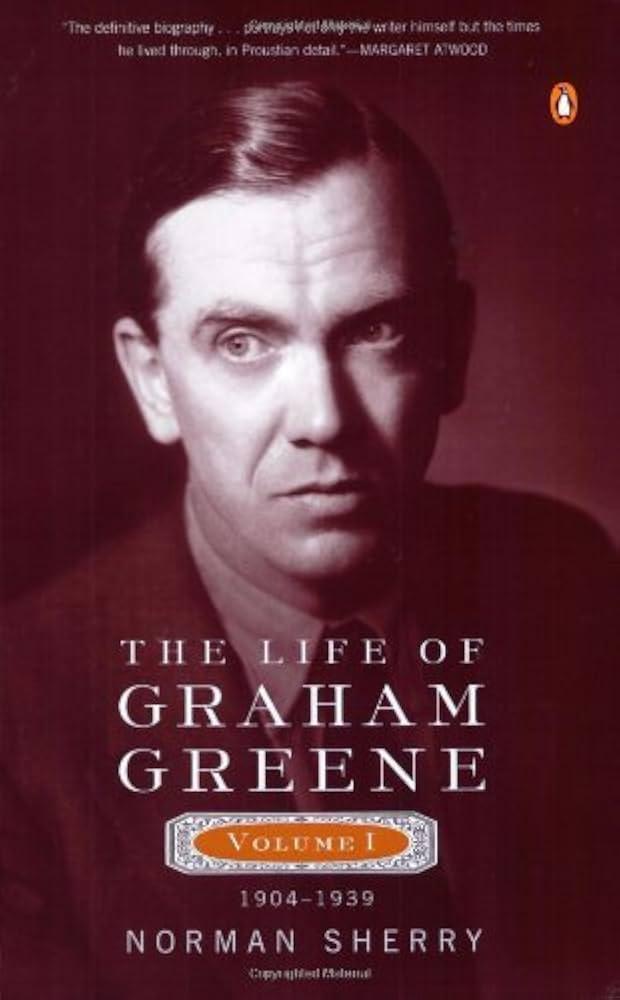
To follow the man behind the manuscripts, begin with sources that let Greene speak for himself and then widen the lens. Prioritize A Life in Letters (ed. Richard Greene) for the unmistakable cadence of his wit, doubt, and duty; then take the one-volume sweep of Russian Roulette: The Life and Times of Graham Greene (Richard Greene) before diving into Norman Sherry’s monumental, three-volume The Life of Graham Greene for fieldwork-level depth. For a counterpoint, Michael Shelden’s The Enemy Within is a brisk, skeptical corrective, while Yvonne Cloetta’s memoir In Search of a Beginning offers the private, domestic Greene that the public record muffles. If you’re hunting paper trails, pair these readings with curated archives that reveal drafts, marginalia, and correspondence-notes where the cool prose runs hot.
- Start here: A Life in Letters (ed. Richard Greene) – primary voice, compact range.
- Next: Russian Roulette (Richard Greene) – modern synthesis with measured judgment.
- For deep research: The Life of Graham Greene (Norman Sherry, 3 vols) – exhaustive, on-the-ground reporting.
- Counterbalance: The Enemy Within (Michael Shelden) – sharp, dissenting view.
- Intimate lens: In Search of a Beginning (Yvonne Cloetta) – personal textures and habits.
| Archive | Where | What to look for | Access |
|---|---|---|---|
| Harry Ransom Center | Austin, Texas | Manuscripts, drafts, correspondence | Finding aids online; appointment |
| Burns Library (Boston College) | Boston, USA | Letters, rare editions, research files | Reading room; request in advance |
| British Library | London, UK | Letters, first editions, periodicals | Reader pass; catalogue search |
| Graham Greene Birthplace Trust | Berkhamsted, UK | Festival resources, local materials | Public events; enquiries by email |
On screen, Greene’s moral chiaroscuro sharpens into light and shadow-start with the essential collaborations and the most faithful modern reappraisals. Put The Third Man (dir. Carol Reed) first for its peerless atmosphere and writerly architecture; follow with The Fallen Idol (Reed), a crystalline adaptation of “The Basement Room,” and the sardonic, Havana-bright Our Man in Havana (Reed). For novel-to-film fidelity, choose The Quiet American (2002, dir. Philip Noyce) and The End of the Affair (1999, dir. Neil Jordan), each alert to Greene’s theology of desire and guilt. Round out with Brighton Rock (1947) for its cold coastal fatalism, then compare with later remakes to trace how context reframes conscience.
- Watch first: The Third Man – blueprint of Greene’s irony and aftermath.
- Then: The Fallen Idol – innocence misread, truth mis-seen.
- Modern high point: The Quiet American (2002) – politics and pity in balance.
- For faith and eros: The End of the Affair (1999) – vows under siege.
- Classic grit: Brighton Rock (1947) – seaside noir, Catholic dread.
- Satirical countertone: Our Man in Havana – espionage as farce, fear as undertow.
The Way Forward
In the end, Graham Greene kept returning to thresholds-the border posts of belief and unbelief, loyalty and betrayal, private conscience and public duty. He wrote with a traveler’s vigilance and a reporter’s ear, shifting between what he called “entertainments” and the more overtly moral novels, yet in both pursuing the same weather: the sudden squall of guilt, the brief clearing of grace, the long overcast of compromise. His pages are populated by watchers and wanderers, men and women who know that choice is rarely clean and that intention and effect seldom align.
That landscape has not vanished. In an age still marked by clandestine bargains, contested truths, and spiritual restlessness, Greene’s fictions remain a map of the human factor-charted without special pleading, shaded by doubt, lit by moments of recognition. If he offered no final verdict, it was because he understood the case is always ongoing. The file closes, the light dims, and somewhere a border gate swings on its hinges; the story, undecided but unmistakable, continues across it.
Leave a Reply